These robots are designed to break through enemy lines
Norway and Sweden test battlefield operations with unmanned systems.
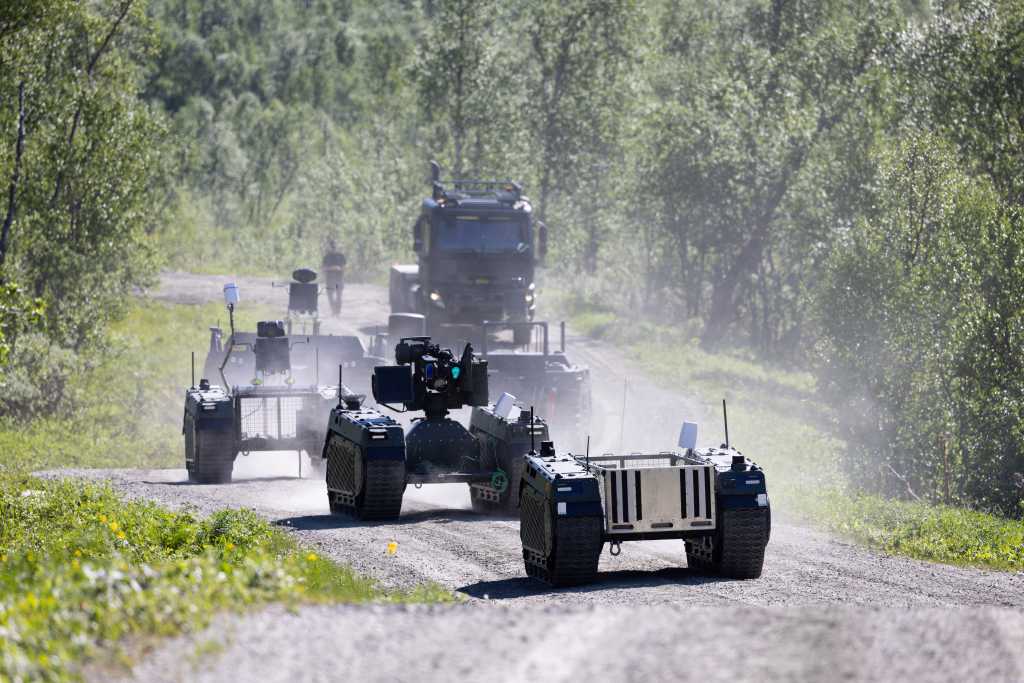
Norway and Sweden have joined forces to explore how unmanned ground vehicles (UGVs) can work alongside drones in future military operations.
On 18. September, the Norwegian Army presented its new concept for unmanned systems.
Earlier this year, Norway hosted its largest-ever trial involving unmanned military ground vehicles. The experiment brought together the Norwegian Army’s Combat Lab, the Swedish Army, researchers from the Norwegian Defence Research Establishment (FFI), and the Swedish Defence Research Agency (FOI), as well as observers from Finland, Denmark, Belgium and the Netherlands.
Putting technology to the test
The scenario was as follows: a team of unmanned vehicles had to push through enemy lines while surveillance and attack drones overhead helped identify and engage threats along the route. The ultimate objective was to get a remotely operated Swedish truck safely through the contested area.
All drones and vehicles were controlled remotely from a command post. Meanwhile, FFI researchers played the role of the opposing force, deploying their own drones to disrupt the operation. Instead of live munitions, the drones dropped tennis balls on their targets.
According to Kim Mathiassen, Research Manager for Manoeuvre and Robotics Warfare at FFI, the exercise was never intended as a test of tactics.
‘The scenario simply provided a framework for evaluating the technology. Our aim was to fail, learn, and identify weaknesses, limitations and opportunities in the unmanned systems, both from a technical and a conceptual perspective.’
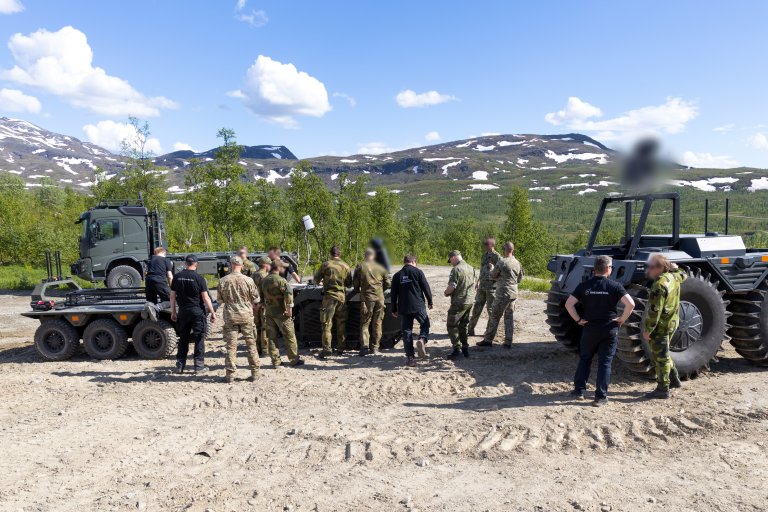
Personnel from Norway, Sweden, Finland, Denmark and the Netherlands exchange lessons learned during the debrief.
One challenge at a time
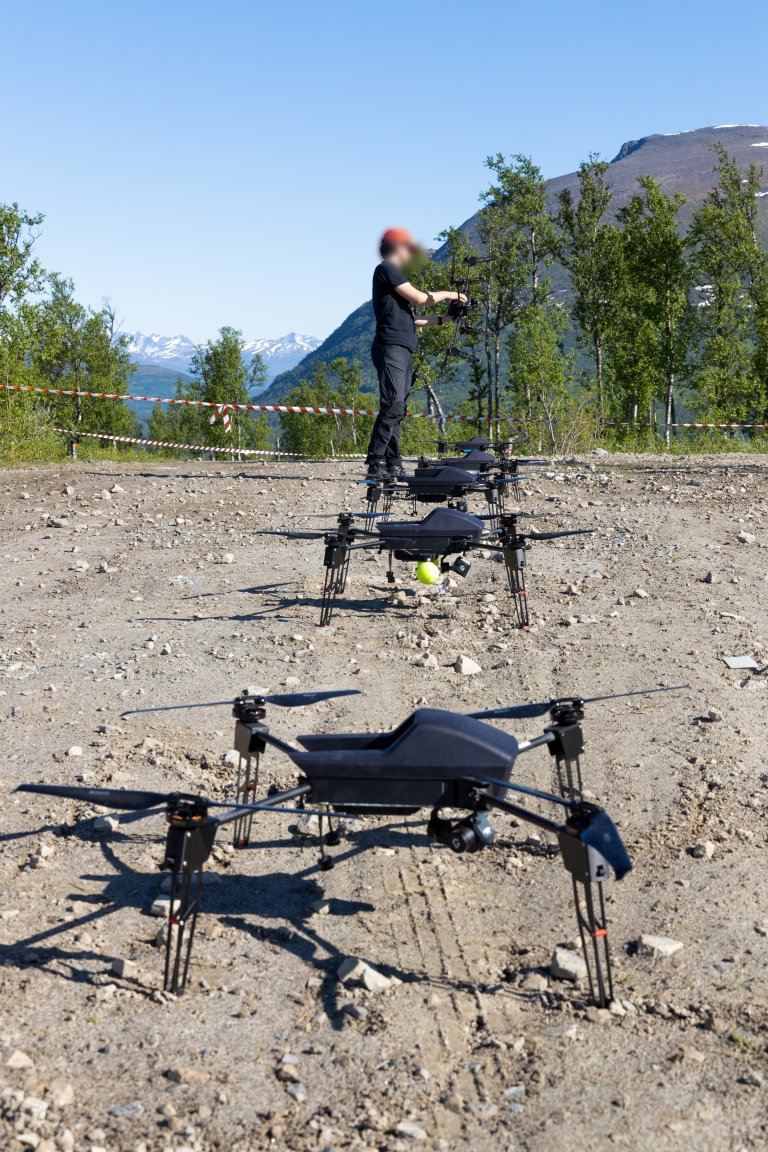
The experiment generated a long list of questions. What kind of workload can operators handle? Do they maintain situational awareness while controlling multiple systems? Can information from drones and unmanned vehicles be integrated effectively into a battlefield management system?
‘We’re taking it slow and steady,’ says Sven Bjerke, who works at FFI as a liaison between Army units and researchers.
‘If something doesn’t work, we stop and fix it before moving on.’
Remotely controlling several unmanned vehicles simultaneously also places heavy demands on communications networks. What happens if signals are jammed?
‘That’s being addressed in parallel, but it’s not the focus of this particular experiment. We need to solve one problem at a time. Right now, the goal is simply to demonstrate a coordinated remote operation that can move from point A to point B,’ says Bjerke.
Preparing for a UGV revolution
Bjerke believes unmanned ground vehicles are on the verge of the same kind of rapid development that drones have experienced in recent years.
‘We’ve seen tremendous progress in UAV technology over the past five years. The same will happen with UGVs. That’s why it’s important to be ready and to start testing these capabilities now.’
He also points to the informal international cooperation as one of the experiment's greatest benefits.
‘We’re all working on the same fundamental challenges. Norway, Sweden, and Finland also share conditions that many other countries don’t, including difficult terrain and harsh winter climates. Commercial solutions aren’t always designed with our requirements in mind.’
Norway was among the first countries to begin experimenting with unmanned ground vehicles, but Bjerke notes that Sweden has since caught up in both strategy and investment.
‘We’ve learned a great deal through trial and error, and we know which pitfalls to avoid. At the same time, we can learn from our partners' experience and expertise. There’s no need for us to make the same mistakes twice.’