Power in Chinese hands? Report warns of the mega grid
China has ambitions to establish a super power grid – not just within its own borders, but across the globe. A new FFI report warns of the consequences.
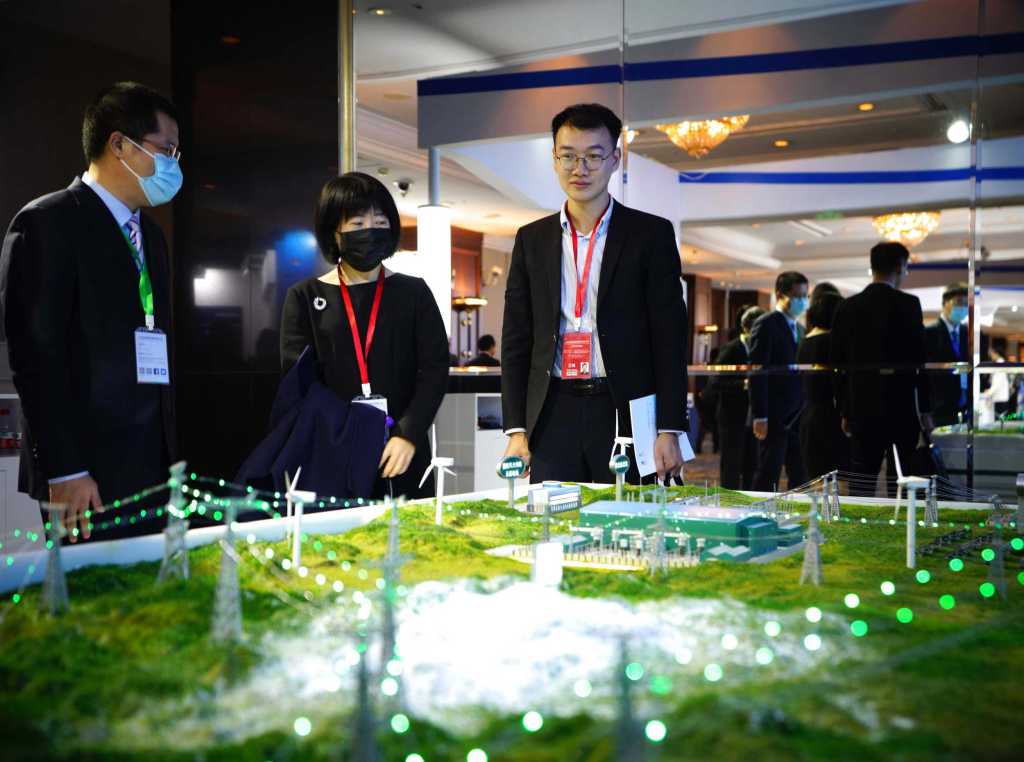
What is China’s plan for electric power, referred to as mega grid? China calls its system the Global Energy Interconnection (GEI).
GEI is a grand vision: a global power grid designed to enable large-scale transmission of renewable energy across continents. At the heart of the plan is the use of ultra-high voltage (UHV) technology in vast networks. These networks connect production and consumption areas worldwide. A particularly appealing aspect of the plan is that the mega grid could help balance global energy demand, thereby significantly reducing greenhouse gas emissions.
China’s plan involves exporting its technical standards for UHV transmission. Chinese companies are then systematically integrated into the energy supply systems of partner countries.
The GEI initiative is primarily intended to serve China’s own interests. It aims to secure access to critical energy corridors and manage national energy security. At the same time, it may tempt many other countries to participate. Who wouldn’t want to join a large, efficient, and reliable power grid that is also far more climate-friendly than today’s?


Report warns
A new FFI report warns of what these ambitions might entail. Although the project promises to accelerate the green transition, the authors argue that it could also make Norway vulnerable to Chinese influence, espionage, and pressure.
Una Palmstrøm Loen and Ingeborg Hove Gusdal authored the FFI report ‘A global energy interconnection? Exploring China’s strategic ambitions and security implications for Norway’.
The report describes how the GEI initiative could connect the world through ultra-high voltage, via new power lines and smart technologies.
‘The goal of a grid that is more environmentally friendly and that meets a globally increasing energy demand is clearly visionary,’ says Una Palmstrøm Loen.
‘But for small countries like Norway, there’s a downside.’
A key point in the report is that GEI is more than just a technical solution. It’s a strategic instrument that China can use to expand its influence, shape global norms, and embed itself in the infrastructure of partner countries. Implicitly, the ambitions are also part of the growing great power rivalry between the United States and China.

Three vulnerabilities
Loen and Gusdal use Norway as an example of how small countries may be challenged.
They highlight three vulnerabilities linked to increased dependence on China in the green transition.
The first is technological dependence: as China dominates key resources and supplies of green technology, Norway may become more reliant on China. This applies to development, maintenance, and modernisation of domestic green equipment. It could make Norway vulnerable to indirect and non-coercive influence from Beijing, and it could reduce national control over energy supply.
Next, the system becomes more complex: the integration of smart technologies, digitalisation, and massive power lines crossing borders creates a far more opaque energy system. This makes it harder to understand risks and vulnerabilities. It also increases the likelihood of both intentional and unintentional errors arising in value chains originating from China.
The third vulnerability is ‘dependence as a weapon’: Chinese technology and resources could be used precisely as such. Dependence may serve as a coercive tool to influence Norwegian decision-making, negotiations, or public debate. Additionally, there’s concern that the technology could provide access to critical information. It could be exploited for surveillance, espionage, or military purposes.
Built-in ambiguity
‘Your report highlights major benefits, but also serious security risks. What is the greatest challenge for Norwegian decision-makers in this obvious intersection between the green transition and geopolitical risk?’
‘This is about navigating a new geopolitical landscape where the boundaries between cooperation and conflict are more blurred,’ Loen and Gusdal respond.
‘GEI has a built-in strategic ambiguity. The liberal world order is under pressure. It’s being replaced by a fragmented, multipolar landscape. Norway, as a small country, must have both technical resilience and strategic foresight to preserve our sovereignty. We have to assess the consequences of such infrastructure cooperation critically, beyond the purely technical aspects.’
‘What could Norway fear if China chooses to wield this power?’
‘The likelihood of direct coercion is low. There is currently no reason to fear that China will shut down the power grid. Rather, it’s about gradual influence over time, and the risk of espionage and surveillance via technology. If the Chinese state gains direct access to critical information, it could be used to strengthen its position in negotiations and for military purposes. The dual nature of projects like GEI is precisely that they can serve both as bridges for cooperation and as tools of coercion.’
Embedding its own standards
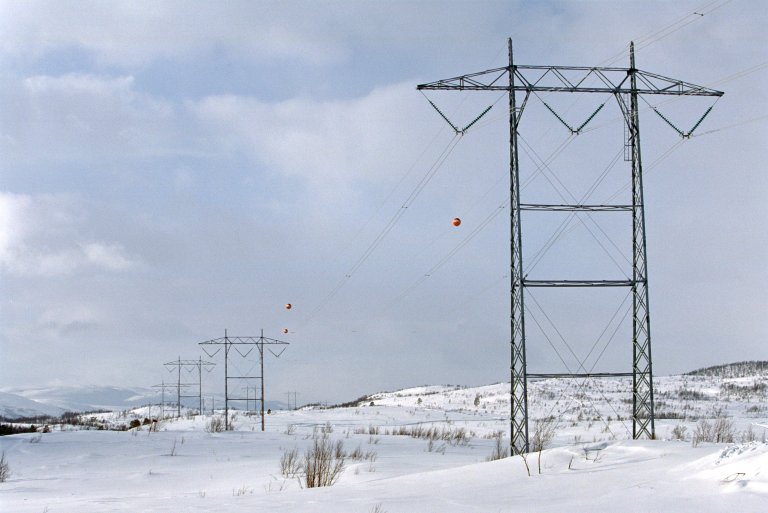
The report emphasises that China’s strategic ambitions are embedded in the very design of GEI. This means, for example, that the country secures long-term access to critical energy corridors. It exports its own technical standards for ultra-high voltage transmission and integrates Chinese companies into the energy supply of partner countries.
‘By promoting a narrative of green development, China is also strengthening its soft power. Still, the picture is clear: regardless of whether Beijing currently intends to exploit GEI, the initiative gives the country the opportunity to expand both its global reach and influence,’ say the authors.
‘Recognising these ambitions is crucial to understanding the broader geopolitical consequences of GEI,’ they conclude.
About the authors
Ingeborg Hove Gusdal

Gusdal is pursuing a master’s degree in societal security at UiT The Arctic University of Norway. In autumn 2025, she’s an exchange student at Stellenbosch University, Faculty of Military Science, in South Africa. She has previously worked in the service industry, in commercial diving, as a research assistant, and in mental health care.
Una Palmstrøm Loen

Loen is completing a Master of Arts in International Relations at the University of Edinburgh. She holds a one-year programme in psychology from the University of Bergen.
Her previous work experience includes serving on the Frogner Youth Council, being an ambassador for KwaXolo Impact, working as a substitute teacher, and working as a home care assistant.