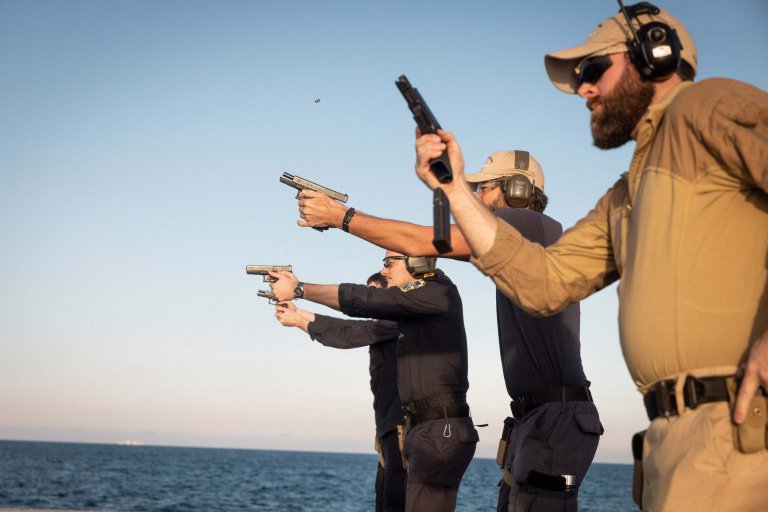
The Armed Forces do not take advice from Hollywood
In the real world, action heroes such as John Wick and Dirty Harry would have lost their hearing permanently, and long before the end credits. Gunfire in Hollywood bears little resemblance to how harmful the sound of gunfire actually is. A very special FFI head helps the Armed Forces inform where noise limits ought to be drawn.
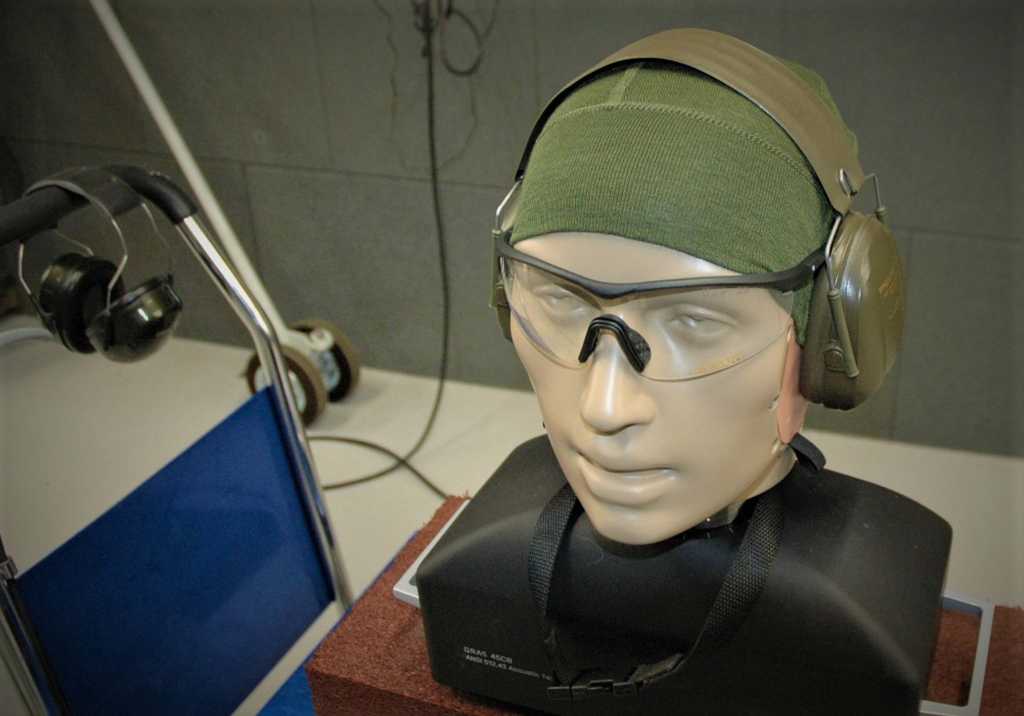
A soldier must hear well and be protected from the sound of their own weapons. Two principles that should apply to action heroes as well. Dirty Harry and John Wick would be guaranteed permanent occupational injury within a single working day if realism were applied as rigorously as punchy one-liners.


Noise complaint?
When Keanu Reeves plays John Wick, his constant barrages of 9 mm pistol fire in narrow corridors would’ve put a permanent end to his hearing long before he would’ve put an end to all his enemies.
It’s even worse for police inspector Harry ‘Make My Day’ Callahan, played by Clint Eastwood, who uses the now-legendary Smith & Wesson Model 29 revolver with .44 Magnum ammunition. The weapon produces a literally ear-splitting bang, exceeding 165 decibels at the shooter’s ear.
In research, sudden sounds that are likely to be harmful to hearing are referred to as impulse noise. In Harry’s case, there’s no doubt that every shot is highly damaging, and not only to his many targets.
While action heroes are able to deliver dry one-liners after each exchange of fire, their real-life counterparts would experience something quite different. Specifically, incapacitation by debilitating tinnitus and acute hearing loss. Without proper protection, the threshold for permanent damage could, at worst, be reached after just one or two shots from their preferred weapons.


A listening stunt performer
Like Hollywood, there’s plenty of gunfire in the Armed Forces. Unlike Hollywood, though, the Armed Forces pays full attention to the dangers of impulse noise. The question is not whether they feel lucky, but where they draw the line. FFI has examined the issue.
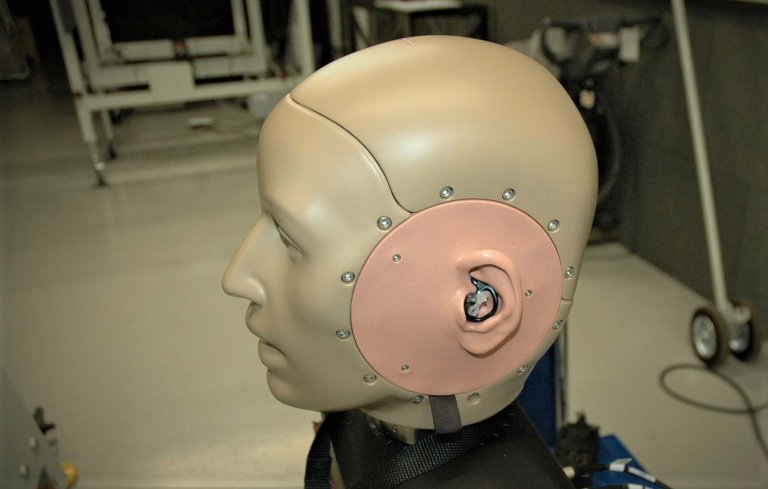
To determine the exact threshold between safety and harm, FFI researchers now use a highly advanced tool: an artificial human head with highly sensitive ears. The Danish-developed head, designated Gras 45CB, is a stunt performer that can withstand almost anything.
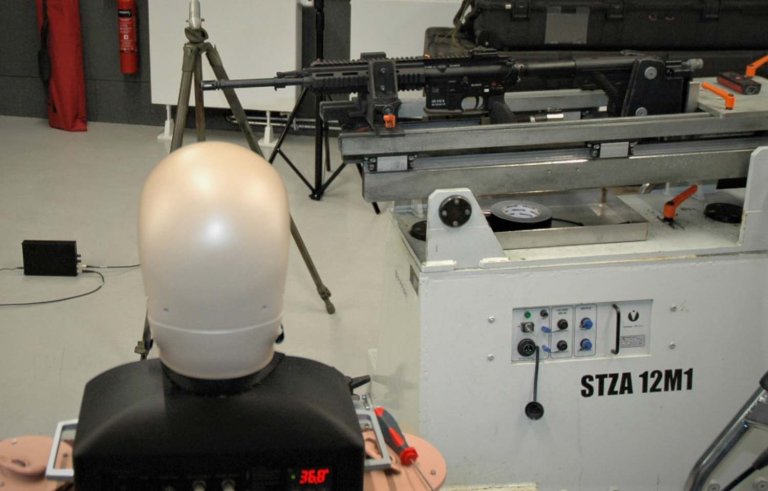
Heated to 37 degrees (to simulate human skin), the head is fitted with various types of hearing protection and earplugs. It’s then exposed to shock waves from real weapons, with sound levels reaching up to 183 decibels. At this level, you’d be rendered deaf instantly, and would probably develop other health issues as well.
The aim is to understand not only hearing loss but also how pressure may propagate through the skull and cause mild brain injuries. Such injuries are referred to in medical terms as mild traumatic brain injury, or mTBI.
Useful noise
The measurements from the stunt head in FFI’s laboratory enables the Armed Forces to follow international standards. With precise data, they can move away from simplified rules and instead assess the actual strain caused by noise over time.
Old, static decibel requirements are, in this respect, an obstacle. The Armed Forces want personnel to train realistically. Until now, the limit for exposure has been 130 dB. In that case, there’s a possibility that certain weapon types can hardly be used at all, even with hearing protection. Could raising the limit to 140 dB at the ear be safe, provided adequate protection? If so, soldiers could train with more powerful weapons in a lawful manner.
Platoon commanders or range officers can’t calculate on the fly what soldiers can tolerate without injury. They need specific and detailed recommendations. For example, tables that state: ‘With these earplugs and this weapon, the limit is 200 rounds per day.’


The soldier’s new budget
With specific recommendations, it’s possible to create a ‘noise budget’ for each individual soldier, even if they train with different types of weapons during the day.
Since FFI’s listening stunt performer helps measure precisely how hearing protection attenuates sound, units also gain better knowledge of which plugs and earmuffs perform adequately.
Earplugs in the ear canal together with earmuffs on top provide full protection against loud reports. Unfortunately, this combination is less than ideal for a soldier in the field because it also blocks out vital communication with fellow soldiers. A soldier needs to be able to hear a whispered order or the sound of an approaching drone, while their delicate inner ear hair cells must withstand the shock waves from the weapons they use. In short, overly effective protection means the soldiers don’t hear everything they should, while insufficient protection leads to hearing damage.
FFI researcher Reza Rahimi’s new report, ‘Effects of hearing protection devices on speech intelligibility and situational awareness’, highlights precisely this problem.
‘What is damaged by very loud noises is precisely the hair cells,’ he explains.
‘And they never grow back.’
Inconsistent direction
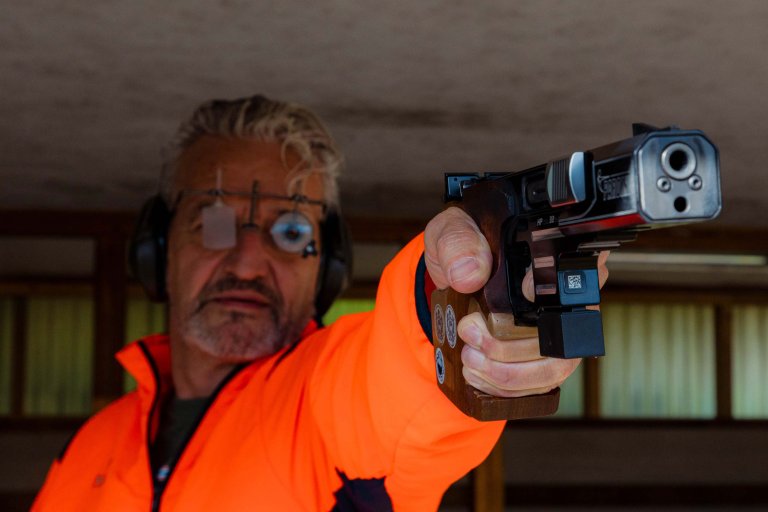
Filmmakers are often highly inconsistent in their portrayal of weapon handling. Dirty Harry, John Wick, and hundreds of other hard-boiled characters don’t care about protection when the going gets tough. But when these same action heroes train on a firing range, nearly all of them wear both earmuffs and protective glasses!
More intelligence
For a soldier in the field, hearing is their very life insurance. The development of new hearing protection is moving away from passive earplugs. The focus now is on intelligent systems that filter out harmful impulse noise within microseconds, while still allowing sounds such as enemy drones or quiet commands to come through.
The goal for the Armed Forces is to train more intelligently with weapons, knowing that when the smoke clears, each soldier’s hearing should remain intact.
John Wick and Dirty Harry may be remembered for their reckless shooting style and winning gunfights. But the real winners are those who listen to research.